How Unmasking your Autism Builds Authenticity
If you know you're autistic—either gone through professional diagnosis or you self identify—then you're probably at some stage of unmasking yourself. My diagnosis came in January 2024 and, although I knew before that, my journey really began after I got it in writing. I was working full time and masking heavily both at work and at home. Though I've been streaming since 2017, I never realized how detrimental my masking was until I severely burnt out in 2021 and delete all of my social media and streaming accounts. When I finally built up the desire to return, I had to start from zero.
Masking is "a conscious or unconscious suppression of natural autistic responses"1. In primary school, I was told I was "too weird" by classmates and "too passive" by teachers. So, in high school, I tried to stop being weird and passive: I made friends, joined dance club, even got a girlfriend—kind of. Eventually, my deliberate, forceful masking started to show its cracks and my friends became less friendly, and I couldn't hold my girlfriend's hand due to a discomfort from physical touch. This led to more bullying and isolation than when I was just weird and passive, and eventually led to me quitting school altogether.
At work, masking meant I went over and above to make people happy—extreme people pleasing. Often at the expense of my own happiness as I would take on too many projects. Since I refused to submit anything short of perfect, I would work under tremendous, self-inflicted pressure. I'd get everything done with a fake smile, never revealing the mental torture that I was under to get across the finish line. There was a measurable pattern where I would work until I burned out, then I would quit until the burnout subsided before starting it all over again at a new job.
In streaming, I fell into the trap of community building. People will tell you that you need a Discord server. You need a donation page. You need fancy overlays. Oh, scratch that, overlays are out of fashion now and now you need a minimalist design. Remember the tip cup? That thing was annoying as hell. In early 2021, my average viewers on Twitch were between 20 and 25. I ran an active Discord which I was moderating alone because that's how I do it. Take it all on myself. When I entered the above-mentioned burnout, I deleted the Discord server and erased my presence from the Internet without a word to even my most devoted community members.
Minimalist is Okay
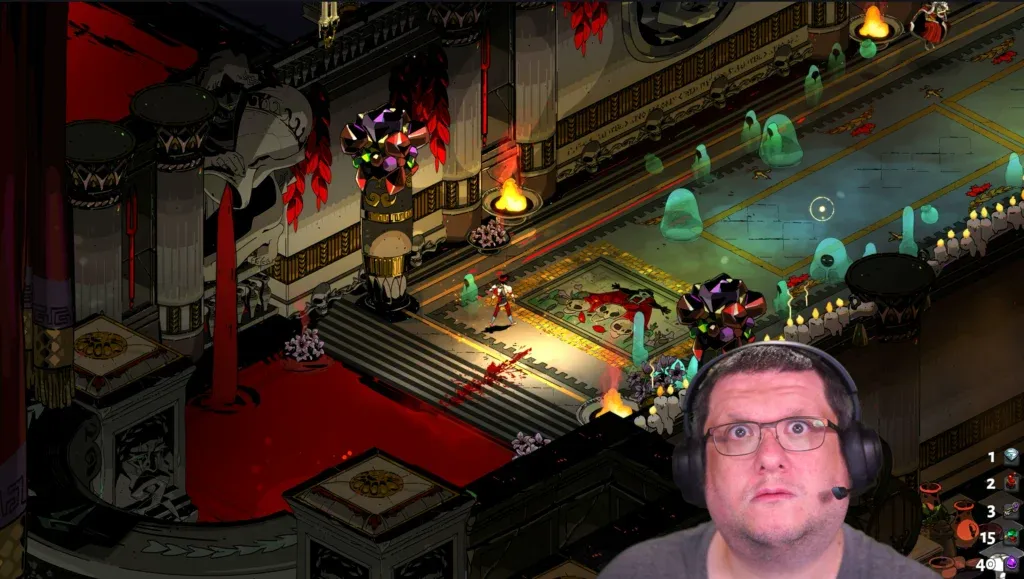
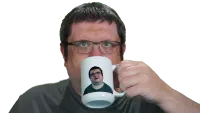
I have always done a minimalist stream. Oh, I experimented with overlays and tip cups, walk-on alerts, and jump scares, but I felt it all detracted from the experience. That said, there are elements that can be valuable and interactive without being distracting. I like a minimalist alert box—just a video of me sipping a coffee, saying welcome. I have a camera somewhere on my screen, and that's it. No extensions, no banners, no noise. Visual or audio. Before my diagnosis, I thought I was just into minimalism, but now I understand it's a way to avoid being overstimulated. It's one of the reasons I think I like Bear Blog—minimalist, quiet, no nonsense blogging. If you're trying to build a stream as an autistic person, I would caution anyone about adding more elements to the stream. In addition to the noise, distraction, and overstimulation risk, it also introduces one more way things can break.
Your Camera is What Creates You
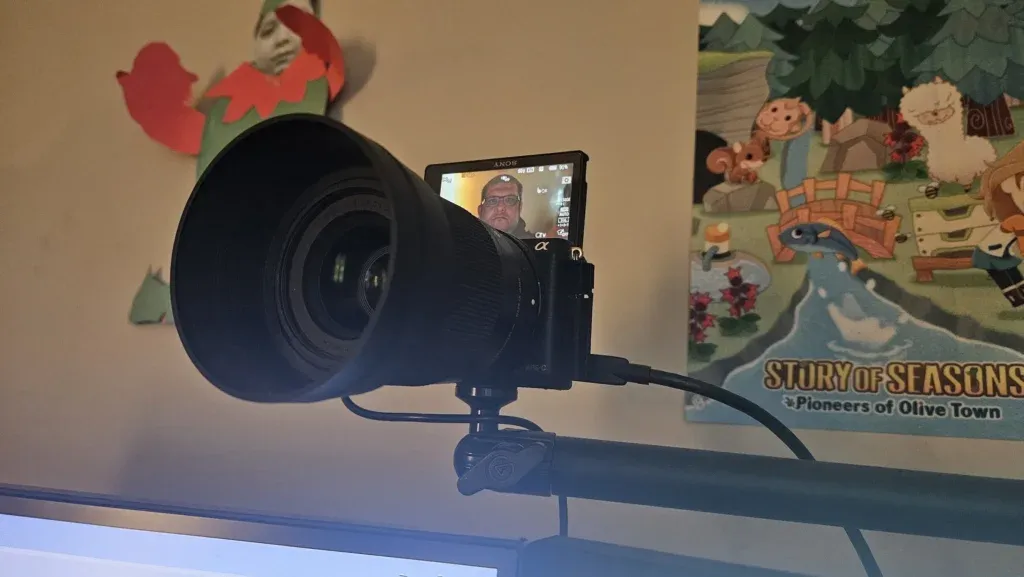
What I mean when I say your camera creates you is that your camera provides your viewers with a direct feed to you—your facial expressions, your imperfections, or your jaw-dropping beauty. Whatever you look like, the camera adds humanity and authenticity to your stream.
With the popularity of VTubers and PNGTubers, we are learning that a persona representing yourself can still be authentic and impactful, meaning you don't necessarily need to put your true face out there for all to see. Although, in an article focused on unmasking yourself, the thought that someone would wear a digital mask is somewhat ironic. But since autistic masking is not wearing a literal mask, I think VTubing or PNGTubing are not contradictory to the idea of being your true self.
What is hard to argue is the value of having a visual representation of you on the screen. IN general, I feel like viewers are there to connect with the streamers who are streaming things they find interesting—whether that be games, hot tubs, or blog writing. It is harder to connect with someone when they are a disembodied voice. Like schizophrenia; but less scary.
Social Media is Stupid
Ignoring the fact that live-streaming platforms are a form of social media, let's talk about the mental impact of maintaining a Twitter or Bluesky account or a Facebook page.
If you want to be successful on social media, you need to be active. Large companies hire social media managers, sometimes social media management teams, because they recognize the amount of work that goes into maintaining a relevant social media presence. How, then, is a small streamer expected to keep up? First off—you're not. You're never going to be Wendy's on Twitter. But, there are still an overwhelming amount of tasks to perform just to grow slowly on social media.

First, you need to post relevant content regularly. It's important to note that regularly does not always mean daily. Regularly means at a regular cadence that the platform's algorithms can predict. YouTube has always been the easiest example of this, and is why creators who post regularly see the best results. Relevant content means it is high quality and original.
Second, it cannot always be about you. If the only thing you ever post on Twitter is, "I'm live right now on YouTube, come check me out (link)!" You'll never see a single follower come over from Twitter. Reddit has the best rule on self promotion—the ten-to-one ratio. You should post ten things that are not about your stream or your content for every one post about your content. If you stream three times per week and post YouTube videos twice a week, you need 50 social media posts that are not about your content, but are still high quality, relevant content, just to hit that magic ratio. And you need to do that for every platform that you're a part of. Although some posts can certainly be copied between platforms, that's not in your best interest, because each platform features a slightly different audience. What works on Twitter may not work on Bluesky, even though they are similar platforms (editor's note: I wrote the original version of this post in 2025, and it's now the second half of 2026 and.. wow, so much has changed with Twitter/X). I have accounts on many social media accounts, with username Ozject, but I am not good at maintaining any regularity in posting. I mostly have the accounts as placeholders, but with no real intent to ever use them. If I was going to move into social media, I would focus on just one or two platforms, but even thinking about that makes me feel sick, so I doubt that's happening in this lifetime.
Streaming as a Social Setting
If you think of streaming as willingly putting yourself into a social setting, you might feel the urge to mask. However, it is my belief that autistic people who begin streaming do so knowing what the expectations are and being okay with them. After all, we are in control of our streams and therefore we control the flow of the conversation and the activities.
When I'm playing a first-person shooter, like Apex Legends, I will often have viewers ask if they can play with me. Apex is a team game, but I find it very different playing with random people than playing with people from stream. My answer isn't simply saying no, however. I welcome people to stream snipe or join and carry me to a win. I also have voice chat disabled so nobody can say anything in my stream that I don't want. Setting this boundary allows me to refuse to put myself in a position I know will be uncomfortable for me without completely shutting down what may be a genuine desire to play the game together. I've had people join and kill me, but I've also had people join and protect me—even when they were on an enemy team. And a few times, those viewers managed to get into my squad and we got to celebrate a win (or just celebrate our immediate deaths together). It created a fantastic opportunity for my community, but I had to be okay with dying immediately when people hunted me down and killed me in the first 30 seconds.
There are some areas where you might find yourself masking. You might laugh at a joke in chat that you don't fully understand. You might enter your chat with pre-written conversations or rehearsed answers to questions you expect. You may conceal your interests to appear more approachable and less autistic to your viewers. These are some of the masking techniques identified in Examples Of Autistic Masking2. What makes live content so special is the unscripted nature of it. I have deleted entire lines, entire paragraphs from this very article—but if you were in my livestream while I wrote it, you would have seen those lost words. That's the experience we're trying to share. Laughing at a joke that misses the mark or preparing a script for every viewer isn't going to make you more authentic—it's going to make you uncomfortable.
Embrace the Crazy

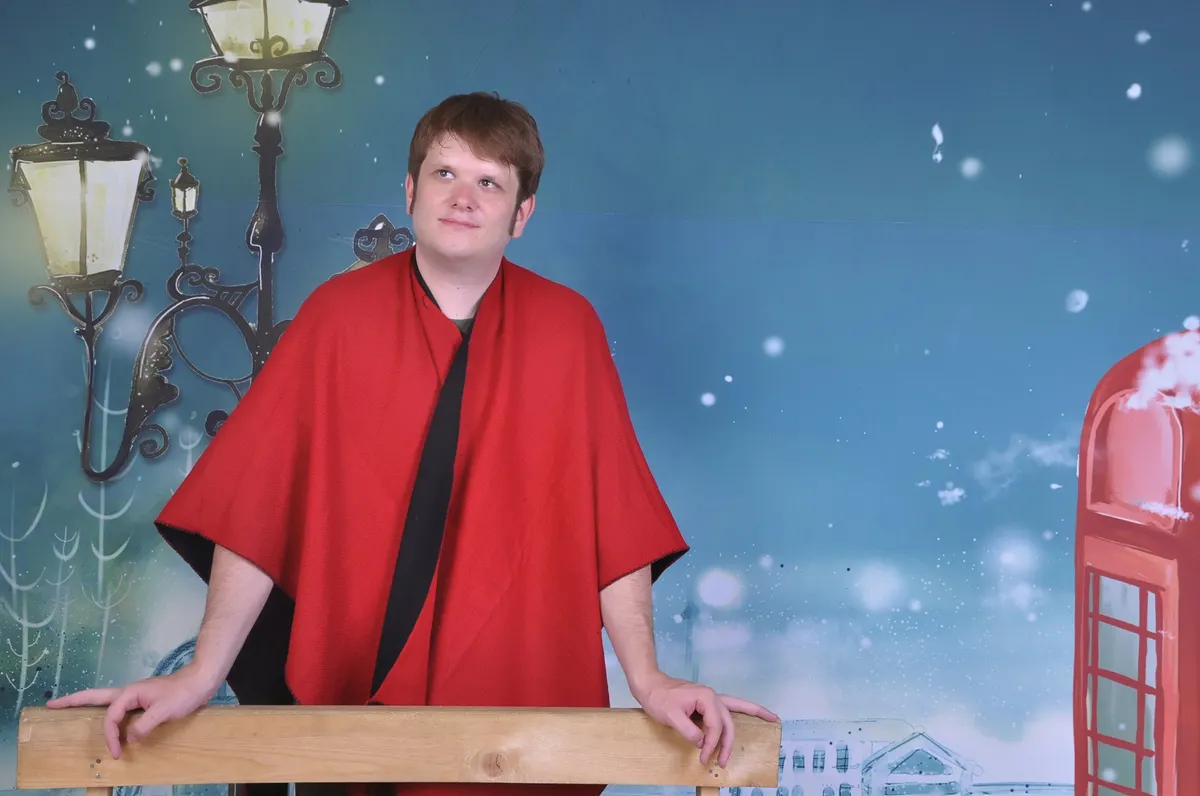
On the topic of crazy, this is a picture from 2009 of a silly photo shoot I did to feel better about myself.
In a previous post, I emphasized the value of embracing your special interests and making your stream all about that interest. In my case, my special interest is streaming. It's the technology. The trends. The equipment. I love everything about streaming, even though I may not be the most entertaining person—I speak in a monotone voice, I rarely look at the camera, and I can't make up my mind on a schedule or a game to play. This puts me in an uncomfortable position for growth, because no two streams are ever the same.
But, when someone comes into my chat and asks me about OBS settings, or microphones, or cameras, you can see my eyes light up like it's Christmas morning and I'm a small child again. I can go on for over an hour, completely forgetting that I'm playing a video game as I go into immense detail about every camera I've ever used or thought about using, why I chose it (or not), and what I would do if I were a new streamer now. Topics about streaming are my favourite things to discuss while streaming.
Part of this likely stems from when I was starting out. There was much less information posted online on how to stream. There was a lot of gatekeeping, and the hardware wasn't that great yet. This was before NVIDIA made NVENC a leader in the scene. This was before Silicon Macs with dedicated hardware encoding. Streaming was hard, and people weren't really willing to answer questions. As I struggled, experimented, and learned, I saw the entire scene open up to be a lot more collaborative and happy to share. This isn't to say I accept self promotion in my streams—but when people come in, talk about streaming in a general sense, asking questions about my setup or discussing their own, I am so happy.
Find your crazy and build your stream around it. At least during the early growth phase, you'll find happiness and safety.
Speaking of Safety..
Stay safe. Existing without masks carries risks—because you may not be used to it. You may reveal identifying information about yourself without even realizing it. Take precautions, and if you're going to script anything, it should be with the goal of keeping yourself safe. Remember the difference between being a person and having a persona. Neither requires masking, but one provides you an element of safety in a dangerous world.
Ozject is an autistic content creator with a Bachelor of Fine Arts in Creative Writing and a Master of Business Administration. He streams on Twitch; produces videos for YouTube and TikTok; and writes blog content for other autistic content creators on the OzHole.
References
Bennie, Maureen, “What is autistic masking?” Jan 11, 2022. Autism Awareness Centre, Inc. Accessed Aug 20, 2026.↩
Guy-Evans, Olivia, “Examples of Autism Masking,” Oct 30, 2024. SimplyPsychology. Accessed Aug 20, 2026.↩