What makes Autistic Streamers Different?
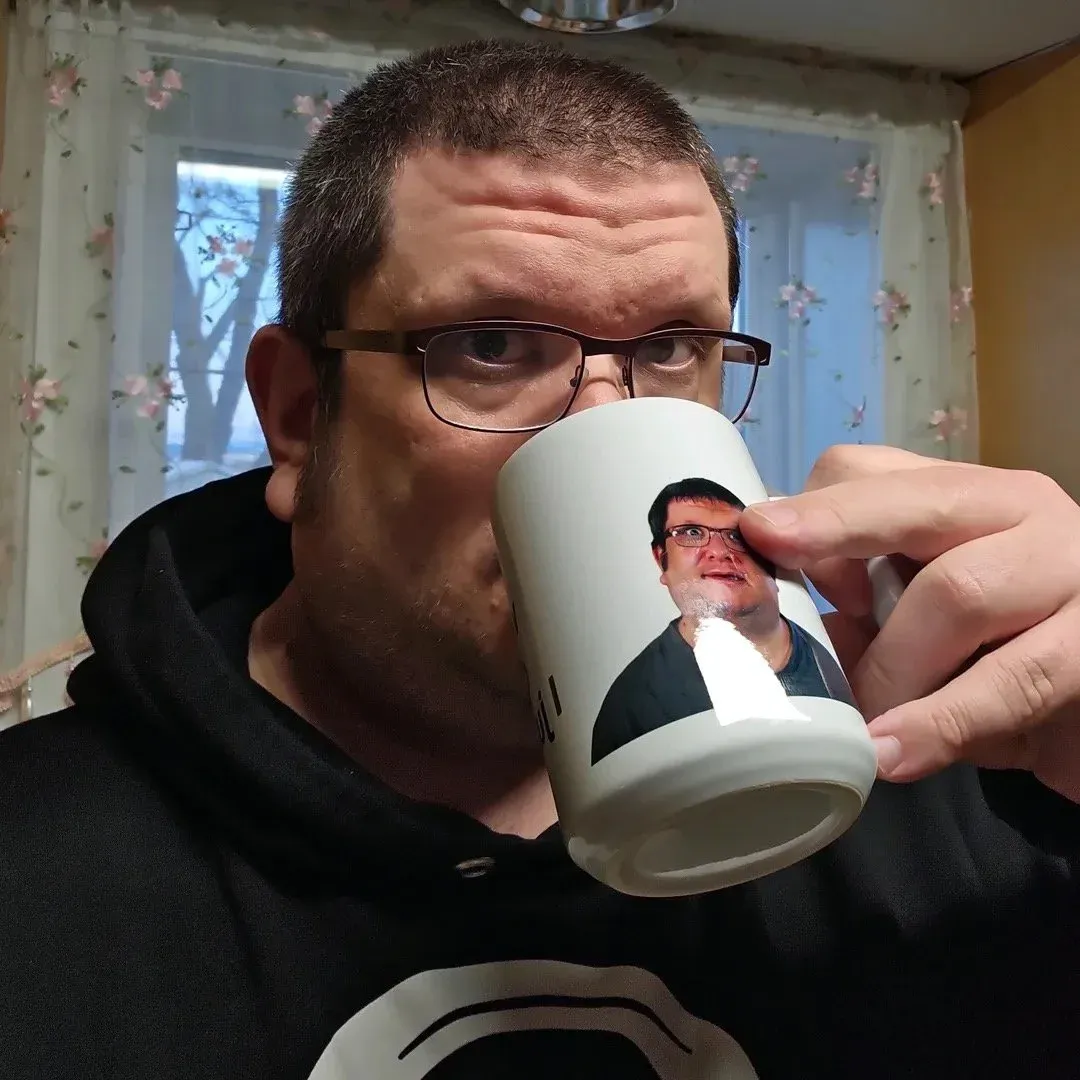
In an effort to revamp and simplify my blogging process, I'm going to do a full re-write of my previous blog posts as my introduction to Bear.
I started streaming in 2015, but I only received my autism diagnosis in 2024. In those nine years, I did a lot of things that streamers are supposed to do, but didn't work for me. This led to long breaks and an on-again, off-again presence on streaming and social media platforms. It wouldn't be until my diagnosis that I would start to understand exactly what caused me problems, giving me the tools to come up with alternatives—or simply go without.
Autistic streamers face the same challenges are any other streamer, but some of the most common advice for stream growth go against many autistic traits. So, with that as the introduction, let's explore what makes an autistic streamer different and find the tools that can help you turn that difference into unique value.
Setting a Schedule
Early in any streamer's journey, everyone hears the advice, "Set and keep to a schedule." I love scheduling things—paths through the supermarket, when I'm going to clean the kitchen, and when I'm going to bed. But I don't know if I am going to be consistently ready to stream every Friday at 8 PM. What if I forget to buy eggs and now Friday's lunch doesn't have eggs, and then the dishwasher spinner was blocked so I can't unpack the dishwasher while I boil pasta? Any interruption during the day can lead to distress.1 And if I'm not 15 minutes early for a scheduled stream I start to panic because I need that much time to test my audio, set descriptions and tags, and mentally prepare myself for the task of going live. Is my key light colour temperature, which has been fine for the last six months, going to trigger my light sensitivity today? Once I'm stuck in my own head, that day is shot.
That's not to say the solution is to have no schedule. There is no arguing the value of consistency, especially if your audience is going to be neurodivergent as well. The key is learning and understanding what barriers could come up that are going to impact your steam, and planning around them or minimizing their impact. If the dishwasher running in the background impacts your audio, learn to run the dishwasher two hours before your stream.
Streaming is a Social Activity
Although streaming is a type of social interaction, I see it much more along the lines of parallel play—an autistic-friendly method of socializing. Parallel play is simply defined as playing alongside someone, not with them. Dr. Regan describes it in a way I really like: a couple is having coffee together but one is doing a crossword while the other is reading a book.2 They still had coffee together.
Autistic creators can utilize parallel play in most video games. Viewers who are either playing themselves, who have played, or who are interested, will enjoy sharing their experience, knowledge, or anticipation with the streamer. This is not unique to autistic streamers, but gives streamers like me a special kind of satisfaction as this type of play is so much more rewarding than cooperative or collaborative play.
Other social elements to streaming, such as reading chat, can be challenge areas for an autistic streamer. I use a text-to-speech service which reads my chat out to me, though when chat gets busy this can be a bit overwhelming. When that happens, I change it to a quiet ding when a new message pops in, and some software can even ding only when there has been no message for a set amount of time. I use socialstream for this.
Setting Boundaries
Over my time as a streamer, I tried setting up community Discord servers a few times. Only after my diagnosis and my final attempt did I realize the mental toll it was taking. When I'm live, I only need to manage the live in the moment. But a Discord server is there all day, every day. I don't have the bandwidth to manage a community like that, so I do not do Discord.
When your boundaries aren't respected, it can trigger our fight or flight response, and if you're anything like me, that's almost always flight. Prior to my diagnosis, and during COVID, I built up a platform of thousands of followers across Twitch, YouTube, and TikTok. I averaged 15 to 20 viewers and I was streaming six days per week. I had an active Discord server and a schedule I was able to stick to without issue. But without my 2024 diagnosis, I lacked the tools and understanding of my limits and didn't recognize that I was disregarding my own boundaries. Fight or flight kicked in, and I went nuclear. In an instant, I deleted all of my social media—over 30,000 followers. Millions of views. Hundreds of thousands of likes and comments.
With the proper tools in hand now, I'm slowly rebuilding. Even a few of my regulars from back then have found me again, but I am constantly reminding myself to take it slow, enjoy the quiet, and recognize when something isn't working and cut it out.

A Positive & Inclusive Space
With autism comes a strong sense of justice and morality.3 I don't have a lot of rules on my stream. The first rule is that every comment should lift others up, not put people down. The second rule is to respect the safe space—no real world political talk. This is an old screenshot, I may have revised that second rule to include more than just politics. The point is to be a beacon in a world of toxicity. I played quite a bit of Apex Legends and Marvel Rivals on stream, which have notoriously toxic communities. I do my best to smile through every match. To not say things like, "What is this Spider-man doing all game?" I stop into random streams of people playing these games and there is so much moaning, complaining.. it's like they forgot they're supposed to be having fun. Or maybe competitive multiplayer has gone so far into the crapper that people find that fun now. Either way, you'll never hear me scream, "Get shit on!" into my mic at the 0-6 Black Panther.
Neurodivergent people already have many struggles fitting into modern society, and everyone needs a place to feel safe. When everyone is a username, a profile picture, and a line of text, there are no barriers to being inclusive.
Autistic Special Interests
I like trains, but not in an autistic way. Dinosaurs are awesome, but I don't have a favourite. I don't have any themed collections. My autistic special interest really came into display the more I learned about streaming and the technology that supports it. Growing up, I'd always been good with computers, but streaming gave me a way to focus that interest and learn about the ways hardware and software communicate, and how I move through that ecosystem.
But, much like a collector who spends money and never receives money for their most prized items, I have a sort of collection of streaming equipment, both active and living in drawers, that I do my best not to think about how much it cost. I've spent years hand selecting each piece of equipment for how it will perfectly fit into my stream, and while some of those parts are under-utilized (looking at you, Stream Deck), overall I'm quite happy with my setup. I haven't actually bought anything for my stream in nearly two years now—because I got everything.
My streaming schedule changes, but the current version is always up on my Twitch. If you come into my stream with questions about streaming, or anything else you've read on the OzHole, I'm always happy to answer them. Early on, I remember going into streams on Mixer and asking people about their OBS settings. Other streamers were not happy to be asked these questions, and I found myself banned from more than one community. When someone asks me about equipment or settings, I take the time to discuss it. I don't view other streamers are my competition—I view them as colleagues. Gatekeeping doesn't make sense, and only stands to discourage those with genuine interest and, maybe, genuine talent.
So come by the stream, maybe read some more posts here (when I finish migrating / making new ones), and let's hang out a little bit.
Ozject is an autistic content creator with a Bachelor of Fine Arts in Creative Writing and a Master of Business Administration. He streams on Twitch; produces videos for YouTube and TikTok; and writes blog content for other autistic content creators on the OzHole.
References
Autism: The challenges and opportunities of an adult diagnosis, Hallie Levine, Harvard Health.↩
Autism and Relationships: Parallel Play in Adulthood, Dr. Theresa Regan, Autism in the Adult.↩
Autistic Strengths, Autistica.↩